Saturday, 10 October, 2026

Madagascar is one of the largest island nations in the world with a highly dispersed population, a fragmented power sector, and low electricity access rates in Africa. National electrification stands at 35–40 per cent, with major disparities between urban centres and rural regions. The country relies heavily on imported diesel, fuel oil, and biomass for energy, while grid infrastructure remains limited, aging, and concentrated mainly around Antananarivo, Toamasina, Fianarantsoa, and Mahajanga.
Despite these constraints, Madagascar possesses exceptional renewable energy endowments—solar irradiation among the highest in Africa, strong onshore wind corridors, large untapped hydro resources, and emerging biomass/biogas potential. The Government has set a clear ambition to expand clean energy as part of its Plan d’Émergence Madagascar (PEM) and its updated NDC, which commits to reducing reliance on fossil fuels, improving energy security, and modernising the electricity system.
Given this renewable abundance and rising interest in sustainable industrial development, Madagascar is emerging as a credible long-term prospect for green hydrogen adoption. The potential is especially pronounced in mining, port infrastructure, and industrial clusters where reliable low-carbon energy is needed.
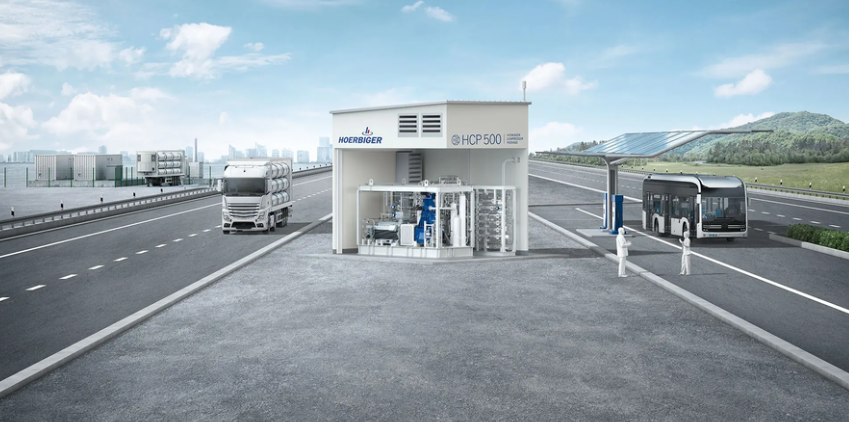
Madagascar currently does not produce or consume hydrogen at any commercial scale. No active hydrogen plants, hydrogen vehicles, or industrial applications are recorded. However, several factors place Madagascar among the African countries with medium to strong long-term hydrogen potential, particularly due to its:
Renewable energy resource base
Growing mining and mineral-processing sector, including nickel, cobalt, ilmenite, and graphite — potential early adopters of green hydrogen for heat, power, and green ammonia-based explosives.
Expanding port corridor (Toamasina Port Expansion Project) that could become a future logistics node for ammonia/hydrogen bunkering.
Agriculture and fertiliser needs where green ammonia could replace imports.
There is no dedicated hydrogen policy, regulation, or national hydrogen roadmap in Madagascar as of 2024–2025.
As of 2025, Madagascar has not yet established specific hydrogen regulations.
Madagascar possesses one of the most diverse and abundant renewable energy resource portfolios in Africa, giving it unique long-term potential for clean electricity production and future green hydrogen development.
Solar energy represents the country’s strongest and most widespread resource. Large parts of Madagascar receive solar irradiation levels exceeding 2,000–2,100 kWh/m²/year, among the highest on the continent, making utility-scale photovoltaic deployment highly viable across the western, southern, and southwestern regions. The vast land availability, low population density in many areas, and strong solar profiles create favourable conditions for large solar parks that could support both grid supply and dedicated renewable-to-hydrogen facilities.
In parallel, the nation has significant onshore wind potential, particularly along the southern coastal corridors around Taolagnaro (Fort-Dauphin), the northern regions near Antsiranana, and select areas of the central highlands. These zones experience consistent and commercially bankable wind speeds, and several private developers have already conducted multi-year wind measurement campaigns, identifying sites capable of supporting tens to hundreds of megawatts of wind power. Such wind resources are critical to creating a diversified renewable mix with higher capacity-utilisation potential for hydrogen electrolysers.
Hydropower adds another strategic dimension to Madagascar’s renewable landscape. The country’s estimated hydropower potential ranges between 7 and 8 GW, yet only a small fraction has been developed to date.
Large hydro projects such as Sahofika (192 MW) and Volobe (~120 MW), currently in advanced development stages, demonstrate the country’s capacity to integrate firm, dispatchable, low-carbon generation into the grid. Hydropower’s baseload characteristics present unique advantages for green hydrogen production, particularly by allowing higher electrolyser utilisation factors and smoother generation profiles. Alongside solar and wind, hydro therefore forms a complementary backbone for renewable-driven industrial development.
In addition to these primary resources, Madagascar holds significant potential for biomass and biogas derived from its extensive agricultural and forestry systems. Residues from rice, sugarcane, coffee, vanilla, wood processing, and other agricultural value chains are widely available and currently underutilised. These biomass streams can support combined heat and power systems, decentralised rural electrification, or hybrid configurations that stabilise renewable-heavy mini-grids.
Madagascar does not have existing manufacturing capability for green hydrogen components such as electrolysers, fuel cells, hydrogen tanks, or compressors.
Madagascar does not yet have any formal green hydrogen projects announced, but has several foundational renewable energy and industrial developments directly relevant to future hydrogen value chains
References:
Africa Energy Portal (2024).
Madagascar Country Energy Profile – Access Rates, Installed Capacity, Diesel Dependency.
Available at:
https://africa-energy-portal.org/country/madagascar
World Bank (2023–2024).
Madagascar Energy Sector Overview & Least-Cost Power Development Plan (LCPDP).
Available at:
https://www.worldbank.org/en/country/madagascar
IRENA (2024).
Renewable Energy Statistics & Madagascar Solar/Wind Resource Profiles.
Available at:
https://www.irena.org
UNFCCC (2021, Updated 2023).
Madagascar Updated Nationally Determined Contribution (NDC).
Available at:
https://unfccc.int
Government of Madagascar – Plan d’Émergence Madagascar (PEM).
Energy, industrialisation, and climate resilience objectives.
Ministry of Energy and Hydrocarbons (MEH) – National Electricity Code.
Framework for renewable energy, IPPs, and sector regulation.
Hydropower Africa Database (2024).
Hydropower potential assessments including Sahofika (192 MW) and Volobe (~120 MW).
Tozzi Green Madagascar (2023–2024).
Solar, hybrid mini-grid, and wind development activities.
Available at:
https://www.tozzigreen.com
Japan International Cooperation Agency (JICA) & Port Authority of Madagascar.
Port of Toamasina Expansion Project – Infrastructure & Logistics Upgrade.
African Hydrogen Partnership (2024).
Hydrogen Readiness in African Markets & Mineral-linked Hydrogen Opportunities.
Available at:
https://www.afr-h2.org
Various Academic Sources (2019–2024).
Studies on Madagascar’s wind corridors, solar irradiation mapping, and biomass potential.