Tuesday, 27 October, 2026




Nauru is highly dependent on imported diesel for electricity generation, with fuel accounting for a major share of national expenditure. Energy security is therefore a critical national priority.
Nauru’s power system is small and isolated, run primarily through diesel generators connected to a single mini-grid. Electricity demand is dominated by government and household consumption, with no large industrial users. Peak loads remain low (2–3 MW), but the system experiences operational challenges due to aging infrastructure, limited redundancy, and high fuel costs.
Recognizing its vulnerability, Nauru is pursuing energy transition pathways emphasising solar PV deployment, battery storage, grid stabilisation, and efficient diesel-offloading strategies. The country’s ambition to increase renewable energy penetration aligns with its National Sustainable Development Strategy (NSDS) and commitments under the Framework for Energy Security and Resilience in the Pacific (FESRIP). While hydrogen is not currently part of Nauru’s energy plans, long-term exploration may be relevant for energy storage or maritime applications.
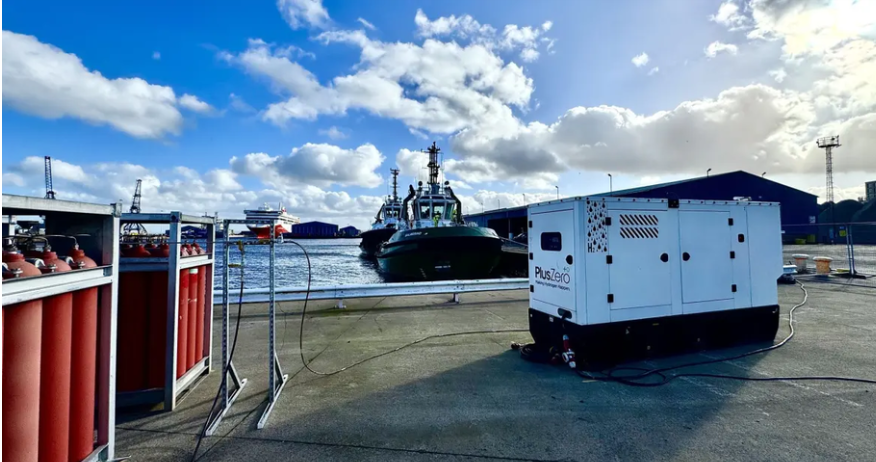
Nauru has no hydrogen production, consumption, or policy framework. As a micro-grid dependent island with low and stable electricity demand, hydrogen is not considered an immediate priority .
At present Nauru has no hydrogen law, strategy, or standards. However, several broader policies shape the enabling environment:
Romania has moved quickly on the regulatory side compared to many regional peers. In 2023, Parliament adopted a dedicated Hydrogen Law that establishes a framework for integrating hydrogen from renewable and low-carbon sources into the industrial and transport sectors. The law sets obligations on fuel suppliers to provide fuels from renewable sources, defines minimum shares of renewable hydrogen in certain fuels, and creates the legal basis for hydrogen network planning, guarantees of origin, and support schemes aligned with EU legislation.
Solar PV is Nauru’s most abundant and practical renewable resource. The island receives high year-round irradiance, comparable to other equatorial Pacific islands, with average daily solar radiation favourable for utility-scale and rooftop PV systems. However, available land is extremely limited because:
Despite these constraints, solar PV remains the cornerstone of Nauru’s renewable energy strategy, with growing deployments supported by development partners such as ADB, Australia, and SPC.
Given Nauru’s small grid and reliance on solar, batteries are essential for maintaining stability and enabling higher renewable penetration. Investments in BESS (Battery Energy Storage Systems) are underway, with the long-term goal of reducing diesel use significantly.
Nauru does not possess any industrial base suitable for hydrogen technology manufacturing or assembly.
There are no hydrogen projects in Nauru at present.
References: