Thursday, 1 October, 2026



Romania has one of the most diversified power systems in Central and Eastern Europe, combining hydro, wind, solar, nuclear and thermal generation. Renewable electricity already plays a major role: hydropower supplies ~34 percent of final electricity consumption, wind contributes ~13 percent, and solar capacity has risen rapidly to about 1.6 GW by early 2024. Romania added 1.7 GW of solar in 2024, raising the renewable share of electricity generation to roughly 48 percent.
The national Recovery and Resilience Plan (PNRR) and REPowerEU chapter position renewable energy expansion and green hydrogen as core pillars of decarbonisation and industrial transformation⁴. Romania’s energy mix, strong wind in Dobrogea, and emerging solar clusters give the country favourable conditions for green hydrogen deployment.
Romania is emerging as one of the more proactive Central/Eastern European countries on hydrogen. The National Hydrogen Strategy and Action Plan 2023–2030 sets out objectives to stimulate clean hydrogen production and use in industry and transport, create a favourable investment environment, and develop “hydrogen valleys” that connect production centres with industrial and mobility hubs.
Under its National Recovery and Resilience Plan, Romania has earmarked €148 million to support at least 100 MW of electrolyser capacity by 2030, with funding directed to companies developing green hydrogen projects. More recently, a newer national strategy and action plan for 2025–2030 has been presented, raising Romania’s ambition to around 153,000 tonnes of renewable hydrogen per year by 2030, requiring more than 2.1 GW of electrolysers powered by about 4.2 GW of new solar and wind capacity.
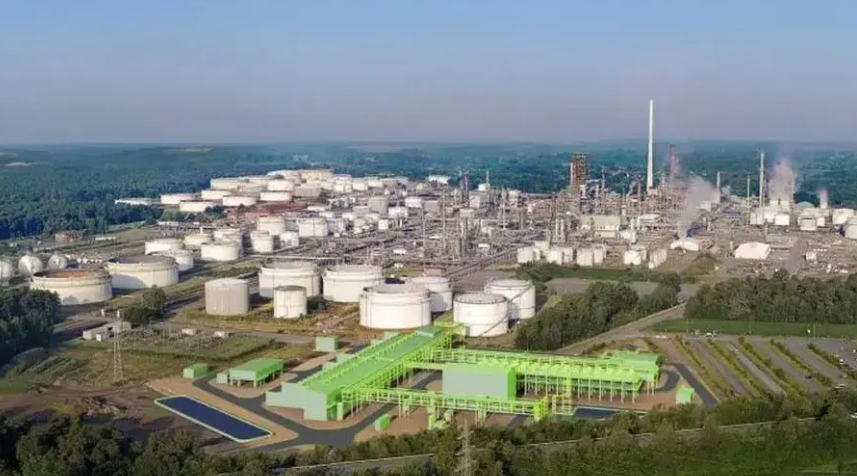
Several concrete pilot and early-stage industrial projects are already underway. The state-owned SAPE company secured PNRR funding for “Hydrogen HY SAPE 10”, a green-hydrogen energy-storage project using a 3 MW PEM electrolyser that will convert renewable electricity to hydrogen and back, with commissioning targeted by end-2025. Oil and gas company Rompetrol Rafinare is seeking a partner to finance, build and operate a green hydrogen plant near its Petromidia refinery at Năvodari, with hydrogen produced from renewable power under a long-term offtake agreement. At the same time, OMV Petrom plans to invest about €750 million at its Petrobrazi refinery, including two green hydrogen production units integrated with sustainable aviation fuel and renewable diesel facilities, expected to start operation around 2028.
Romania is also testing hydrogen’s role in gas networks: a first pilot project is analysing the behaviour and compatibility of existing gas distribution infrastructure when blending hydrogen with natural gas, laying the groundwork for future decarbonised gas grids. Overall, Romania’s hydrogen profile can be described as early deployment with clear scale-up targets, anchored in EU funding and industrial decarbonisation needs (refining, fertilisers, steel, and transport).
Romania’s government has set in motion its National Hydrogen Strategy 2025–2030, aiming to guide its energy transition and foster a clean hydrogen economy. This plan evaluates current conditions in Romania and benchmarks itself against leading practices in Europe and globally. Central to the strategy is renewable (green) hydrogen—seen as vital for slashing greenhouse gas emissions and substituting fossil fuels across critical sectors such as industry, transport, energy, and heating systems.
By 2030, the country is targeting an annual production of 153,000 tonnes of green hydrogen, primarily to decarbonize heavy industry and transport. Achieving this will require installing over 2,100 MW of electrolyzers, powered by approximately 4,200 MW of new solar and wind capacity. The strategy aims to fully replace current “gray” hydrogen—derived from fossil fuels—with clean hydrogen, potentially slashing Romania’s CO ₂ output by more than 2 million tonnes per year, and modernizing its industrial infrastructure.
The strategy also outlines the development of five “hydrogen valleys”, which will serve as integrated regional hubs linking production, transport, and consumption. These include the corridors Bucharest–Ploiești–Pitești, Constanța–Medgidia, Cluj–Târgu Mureș, Galați–Brăila–Tulcea, and Craiova–Slatina. These clusters are designed to draw investment, create employment, and connect Romania to Europe’s emerging hydrogen infrastructure.
Additionally, the strategy establishes a legal foundation via Law 237/2023, mandating quotas, issuing certificates of origin, and introducing contracts for difference to support renewable hydrogen. Despite this framework, implementation hinges on finalizing detailed rules to attract investment. Several pilots are already underway—such as the €140 million Ro-HydroHub in Râmnicu Vâlcea, OMV’s 20 MW Petrobrazi plant, and Delgaz Grid’s 20HyGrid hydrogen-blending initiative—highlighting the strategy’s role in instilling market confidence and linking Romania to the broader European hydrogen ecosystem.
Hydrogen is also embedded in Romania’s PNRR and REPowerEU chapter, where measures include reforms and investments for green energy expansion, hydrogen funding lines, and hydrogen-related research and innovation, such as the Ro-HydroHub national research and innovation centre, which receives around €140 million in EU financing. Together, these instruments position Romania as a relatively advanced EU hydrogen market in terms of policy frameworks, even if implementation is still at an early stage.
Romania has moved quickly on the regulatory side compared to many regional peers. In 2023, Parliament adopted a dedicated Hydrogen Law that establishes a framework for integrating hydrogen from renewable and low-carbon sources into the industrial and transport sectors. The law sets obligations on fuel suppliers to provide fuels from renewable sources, defines minimum shares of renewable hydrogen in certain fuels, and creates the legal basis for hydrogen network planning, guarantees of origin, and support schemes aligned with EU legislation.
Romania’s renewable energy potential is substantial and diversified, providing a strong foundation for green hydrogen development. Hydropower has long been the backbone of the system: large hydro plants on the Danube and in the Carpathian region contribute roughly 34 percent of final electricity consumption, and hydro remains a key source of flexible, dispatchable low-carbon power.
Wind and solar have expanded rapidly over the past decade, especially in the Dobrogea region near the Black Sea and across the southern plains. By 2023, Romania had over 3,000 MW of installed wind capacity, representing around 16 percent of total installed capacity and delivering about 13 percent of electricity generation. Solar PV has shifted from a modest base to strong growth: net installed solar capacity reached around 1.6 GW by early 2024, up from 1.2 GW a year earlier, thanks to a wave of utility-scale projects and prosumer rooftops. In 2024, around 1.7 GW of new solar was added, with renewables overall increasing capacity by roughly 14% and raising the renewable share of electricity generation to approximately 48 percent.
Romania’s onshore wind potential in Dobrogea is among the best in Europe, with high capacity factors and strong grid interconnection options to neighbouring markets. Solar resource quality is solid across much of the country, particularly in southern and western regions, making large-scale PV economically attractive. Biomass and biogas resources—linked to agriculture and forestry—also offer additional renewable options, while upcoming new nuclear units at Cernavodă will further strengthen the low-carbon base, which can be complemented by variable renewables and hydrogen for flexibility.
For hydrogen specifically, the combination of strong wind in Dobrogea, rapidly scaling solar, and dispatchable hydro means Romania can design hybrid renewable portfolios to feed electrolysers with high utilisation factors. This, coupled with EU funding and clear hydrogen targets, positions Romania as a credible future producer of cost-competitive renewable hydrogen for domestic use and regional trade.
Romania has a mature industrial base, including steel, machinery, chemicals, fertilisers, automotive components, and energy equipment manufacturing. While there is no large-scale domestic electrolyser manufacturing yet, the country is increasingly attracting clean-tech manufacturing and component investment. For example, US company Lockheed Martin, together with local partner Sinteza SA, is investing around €50 million in a negative electrolyte factory for flow batteries in Oradea, signalling Romania’s potential to become a regional manufacturing hub for advanced energy materials and equipment.
Romania also has extensive expertise in pipeline construction and operation (Transgaz), high-voltage equipment, and industrial fabrication, which can be leveraged for hydrogen infrastructure—such as pipeline repurposing, new hydrogen backbone segments, storage vessels, and balance-of-plant systems. The RESInvest programme, coordinated by the Romanian Wind Energy Association (RWEA), explicitly aims to build a local supply chain for renewable technologies, including components and services that could, over time, extend to hydrogen value chains as well.
Romania’s green hydrogen pipeline remains relatively small in absolute terms but includes several funded projects and a broader initiative under the National Recovery and Resilience Plan (NRRP). Through the NRRP, the country has allocated between €86.5 million and €148 million to support at least 100 MW of electrolyzer capacity for industrial hydrogen production by 2030, with multiple consortia preparing projects under this scheme.
One notable project is Hydrogen HY SAPE 10, a 3 MW PEM electrolyzer-based storage system that uses renewable electricity to produce, store, and reconvert green hydrogen into power. This project, costing about 54.6 million lei (with roughly 30 million lei from NRRP), is expected to be commissioned by the end of 2025.
Additionally, Rompetrol Rafinare plans to develop a green hydrogen plant near the Petromidia refinery, seeking a private partner to finance, build, and operate the facility for long-term integration into low-carbon fuel production. The facility is expected to generate at least 11,000 tonnes of green hydrogen each year, requiring approximately 75 MW of renewable electrical power, which the partner must provide.
OMV Petrom is investing €750 million to transform its Petrobrazi site into a sustainable fuels hub, which will include two green hydrogen units to supply approximately 250,000 tonnes of sustainable fuels annually starting in 2028. Romania is also piloting hydrogen blending in natural gas networks to assess compatibility with existing infrastructure, a key step toward decarbonizing heating and industry.
Finally, the country is establishing Ro-HydroHub, a national hydrogen research and innovation center funded with nearly €140 million, aimed at advancing R&D, demonstration projects, and workforce training for hydrogen technologies.
References: